
Table of Contents
Chiropractic care for Achilles tendonitis is often sought by runners, footballers, netball players, and gym-based athletes experiencing persistent Achilles tendon pain. While many people still refer to this condition as “Achilles tendonitis,” modern sports medicine more accurately describes it as Achilles tendinopathy, particularly when symptoms persist or recur.
For athletes across Maffra and surrounding Gippsland communities, including Stratford, Rosedale, Longford, Seaton, and Newry, Achilles pain can significantly disrupt training, sport participation, and daily movement. Early assessment and appropriate management may help address contributing biomechanical factors, support tendon recovery, and reduce the risk of ongoing symptoms that interfere with performance and activity levels.
Our clinic is located at 140 Johnson Street, Maffra VIC 3860
Many athletes explore chiropractic care for Achilles tendonitis as part of their recovery journey. Chiropractic care may support mobility, function, and rehabilitation when combined with structured exercise-based loading.
Understanding Achilles Tendonitis (Tendinopathy)
The Achilles tendon is the thick band of connective tissue that attaches the calf muscles to the heel bone. It plays a critical role in absorbing and transferring force during:
- Running
- Sprinting
- Jumping
- Landing
- Walking uphill
- Accelerating and changing direction
Because it experiences extremely high repetitive loads, it is one of the most commonly overloaded tendons in sport and recreational activity.
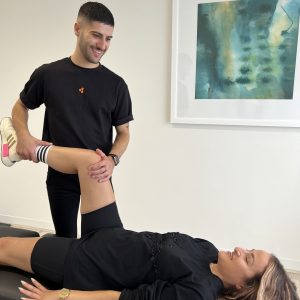
Common symptoms athletes experience
Athletes with Achilles tendinopathy commonly report:
- Pain at the back of the heel or lower calf
- Morning stiffness when first walking
- Pain after running or sport
- Tightness during acceleration or jumping
- Reduced calf endurance
- Pain that worsens after activity rather than during it
- Difficulty pushing off explosively
Symptoms often fluctuate depending on training load. Many athletes initially ignore mild warning signs until symptoms become persistent and begin affecting performance.
Why Achilles Tendon Pain Is Common in Maffra Athletes
Achilles tendon injuries rarely result from a single event. Instead, they develop gradually due to repeated overload.
Athletes in regional Victoria including Maffra, Seaton, Stratford, Rosedale, Longford, and Newry often participate in multiple sports and training environments, increasing cumulative load on the tendon.
1. Sudden training load increases
One of the biggest contributors to Achilles tendon pain is doing too much, too quickly.
Examples include:
- Rapidly increasing running distance
- Adding sprint or hill sessions without progression
- Returning to sport after reduced activity
- Increasing gym intensity too quickly
- Performing repetitive jumping drills without recovery
Tendons adapt more slowly than muscles and cardiovascular fitness. This means athletes often feel physically “fit enough” before the tendon has actually adapted to the load demands being placed upon it.
2. Calf tightness and muscle imbalance
Strong calf muscles are essential for absorbing force efficiently.
Weakness or reduced endurance in the calf complex can increase tendon strain, particularly during:
- Sprinting
- Jumping
- Deceleration
- Uphill running
Research consistently shows that improving calf strength is one of the most important components of Achilles tendinopathy rehabilitation.
3. Restricted ankle mobility
Limited ankle dorsiflexion (the ability to move the knee forward over the foot) can alter lower limb mechanics and increase stress through the Achilles tendon.
Restricted ankle movement may contribute to:
- Poor shock absorption
- Reduced movement efficiency
- Compensatory calf overloading
- Altered running mechanics
This is why mobility assessment forms an important part of rehabilitation planning.
4. Footwear and surface changes
Sudden changes in environment often contribute:
- Worn-out running shoes
- Hard playing surfaces
- Uneven terrain (common in regional sports fields)
- Switching footwear types too quickly
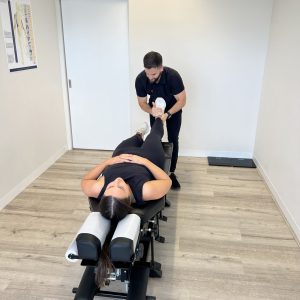
Can Chiropractic Care Help Achilles Tendonitis?
One of the most common questions athletes ask is whether chiropractic care can directly treat Achilles tendon injuries.
The most evidence-based answer is:
Chiropractic care may support Achilles tendinopathy recovery when combined with progressive rehabilitation and load management.
It is not considered a standalone cure for tendon injury, but it may assist with:
- Improving movement quality
- Addressing mobility restrictions
- Supporting rehabilitation progression
- Reducing mechanical overload
- Improving lower limb function
An Evidence-Based Approach to Sports Chiropractic Care
At our chiro practice in Maffra, care approaches are guided by current evidence and movement-based rehabilitation principles.
Care is led by:
Dr. Sam Lietzau - Chiropractor
BESSci. BHSci. BAppSci. (Chiropractic)
Qualifications include:
- Bachelor of Health Science
- Bachelor of Applied Science (Chiropractic)
- Bachelor of Exercise & Sport Science
- Sports Chiropractic Practitioner
Dr. Sam Lietzau has a strong focus on evidence-based musculoskeletal care, rehabilitation, and movement performance.
His clinical background in exercise and sports science supports a rehabilitation-focused approach that integrates:
- Movement assessment
- Strength and conditioning principles
- Rehabilitation programming
- Load management strategies
- Hands-on care where appropriate
As both a certified personal trainer and Reformer Pilates instructor, Dr. Sam has a particular interest in helping active individuals improve movement efficiency, manage injuries, and return to sport safely.
Rather than relying solely on passive treatment, care is centred around identifying the underlying factors contributing to pain and dysfunction.
This may include:
- Strength deficits
- Mobility restrictions
- Training load errors
- Movement inefficiencies
- Reduced tendon capacity
What a Sports Chiropractor May Assess for Achilles Pain
Athletes presenting with Achilles pain often require assessment beyond the tendon itself.
At our chiropractic practice located at 140 Johnson Street, Maffra VIC 3860
Assessment commonly includes:
- Ankle mobility testing
- Calf strength and endurance
- Foot mechanics during walking and running
- Hip and knee control
- Single-leg stability
- Jumping and landing mechanics
- Load tolerance assessment
This broader approach helps identify factors that may be contributing to repeated tendon overload.
How Chiropractic Care May Support Recovery
1. Supporting lower limb mobility
Restricted joint movement can influence force distribution through the tendon.
Manual therapy and mobility-focused approaches may assist with:
- Improving ankle movement
- Enhancing lower limb mobility
- Supporting movement efficiency
- Reducing compensatory loading patterns
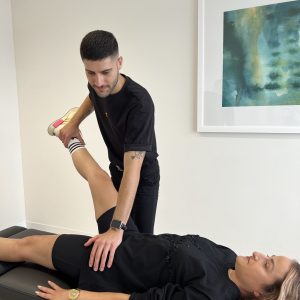
2. Addressing calf muscle tension and stiffness
Calf tightness commonly accompanies Achilles pain.
Management strategies may include:
- Soft tissue therapy
- Mobility exercises
- Movement retraining
- Guided stretching
- Neuromuscular activation exercises
The goal is not simply temporary relief but improving functional movement capacity.
3. Rehabilitation and exercise progression
Progressive loading is considered the cornerstone of Achilles tendinopathy rehabilitation.
Exercise-based management may include:
- Heavy slow resistance training
- Eccentric calf strengthening
- Isometric loading strategies
- Plyometric progression
- Return-to-running programs
Load progression must be carefully managed to avoid flare-ups while gradually improving tendon resilience.
When to Seek Professional Assessment
Early assessment can improve recovery outcomes and reduce the risk of long-term tendon degeneration.
Athletes should seek support if:
- Symptoms persist beyond a few weeks
- Pain increases during activity
- Morning stiffness becomes more noticeable
- Performance declines
- Daily movement becomes uncomfortable
A sports chiropractor for Achilles tendonitis consult may work alongside physiotherapists, podiatrists, or sports doctors to provide a comprehensive approach to care.
Book an Achilles Tendon Assessment in Maffra
If Achilles pain is limiting your running, training, or sport performance, early assessment can help identify contributing factors before symptoms become more persistent.
We support athletes across:
- Maffra
- Seaton
- Newry
- Stratford
- Rosedale
- Longford
Our approach combines:
- Evidence-based rehabilitation
- Movement assessment
- Sports chiropractic care
- Strength and mobility strategies
- Individualised rehabilitation planning
Book a sports injury assessment today to start your recovery plan.
Frequently Asked Questions
Chiropractic care for Achilles tendonitis may support recovery by improving movement quality, addressing mobility restrictions, and assisting rehabilitation progression when combined with exercise-based treatment.
A chiropractor may assess ankle mobility, calf strength, lower limb mechanics, and movement patterns, then provide rehabilitation guidance and supportive treatment strategies.
Not exactly. Tendonitis refers more specifically to short-term inflammation, while tendinopathy describes longer-term tendon overload and structural change.
Recovery can range from several weeks to several months depending on severity, tendon capacity, and rehabilitation consistency.
Not always. Modified running may still be appropriate in mild cases, but worsening symptoms should be professionally assessed.
Common contributors include training overload, calf weakness, reduced ankle mobility, poor load management, and inefficient movement mechanics.